Injection moulding is often viewed as a straightforward manufacturing process, but the decisions made before production begins have a lasting impact on quality, cost and scalability. This two-part guide breaks down what you need to understand before committing to tooling or production, from manufacturing fundamentals through to design and commercial considerations.
In this first part, we focus on the foundations of injection moulding including the process itself, material selection, machine capability and specialist technologies, to help you make informed decisions that avoid costly design changes later.
Choosing the right injection moulding partner isn’t just about finding a company with the right equipment. It’s about finding a manufacturer who understands your design challenges, can advise on material selection and tooling strategy and has the production capacity to deliver consistently at scale.
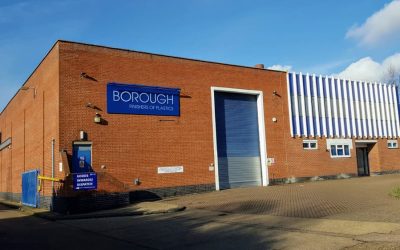
Here at Borough, we’ve been injection moulding components for decades, building a moulding shop that now includes machines ranging from 70 to 400 tons. Over that time, our equipment has recorded nearly 500,000 operating hours, producing high-quality components for automotive, washroom and consumer goods sectors.
Whether you need high-volume production of standard components or specialist capabilities, such as two-shot moulding for complex plated applications, understanding the fundamentals helps you make better decisions about design, cost and manufacturing strategy.
The process: more than just melting plastic
Injection moulding works by melting plastic pellets and injecting the molten material under high pressure into a precision-engineered mould. The plastic cools, solidifies to the exact shape of the mould cavity and is ejected as a finished component. The cycle repeats, producing identical parts with remarkable consistency.
The simplicity of that description hides considerable complexity. Material selection affects everything from cycle time to dimensional stability. Tool design determines surface finish, ejection marks, and whether features such as undercuts are feasible. Machine selection affects the size of components you can mould and the process efficiency.
This is where manufacturer expertise matters, as an experienced moulder doesn’t just run your tool. They advise on design optimisation before the tool is cut, recommend materials based on your application requirements and identify any manufacturing issues while they’re easy to fix.
Materials: matching plastic to purpose
The choice of plastic material fundamentally shapes what your component can do. At Borough, we work primarily with ABS (Acrylonitrile Butadiene Styrene), valued for its excellent impact resistance and surface finish. ABS is our preferred material for automotive trim, consumer goods mouldings and any application requiring a high-quality surface finish.
Polypropylene offers chemical resistance and flexibility, making it ideal for packaging and automotive interiors. Polycarbonate delivers exceptional impact strength for safety applications. Nylon provides mechanical strength for gears and bearings. Each material brings different properties to cycle time, shrinkage rates and post-processing requirements.
The right material choice depends on your component’s end use, environmental exposure, mechanical requirements and appearance standards. Getting this decision right from the start, can save considerable time and expense later.
Plant capability: why machine specification matters
The size and specification of injection moulding equipment directly affect what components you can produce. Our plant includes machines from best-in-class manufacturers ROMI and ENGEL, giving us capacity from small precision components through to large automotive trim measuring nearly a metre in length.
Our ENGEL 400C represents a significant capability step. As a tie-bar-less machine, it eliminates the four corner posts found on conventional equipment, allowing larger tools to be accommodated on a more compact machine footprint. More importantly, tie-bar-less technology delivers exceptionally even clamping force distribution across larger tools, improving dimensional consistency on big components.
This machine also introduced two-shot moulding capability to our plant. Two-shot technology allows us to mould components using two different materials in a single cycle. For complex assemblies, this eliminates the need for secondary bonding or mechanical fixings.
For functional designs, it means you can combine rigid and flexible materials in a single component, such as a hard structural body with soft-touch grips, or decorative elements with functional backing.
Two-shot moulding opens design possibilities that simply aren’t available with conventional single-shot processes. It’s particularly valuable where you need selective material properties in different areas of the same component, such as chrome plating a decorative component whilst leaving the moulded trim clips free of plating to retain flexibility.
With a clear understanding of the injection moulding process, material options and plant capability, the next step is translating that knowledge into practical design decisions. The way a component is designed for moulding directly affects performance, appearance and cost and that’s where many projects are won or lost. In part two, we focus on the design principles, integration advantages and commercial considerations that ensure injection moulding delivers maximum value.